How to Choose Tennis Shoes by Court Surface
Wearing the wrong shoes on the wrong surface wears them out faster, hurts your movement, and can cause injuries. Here's exactly what to look for depending on where you play.
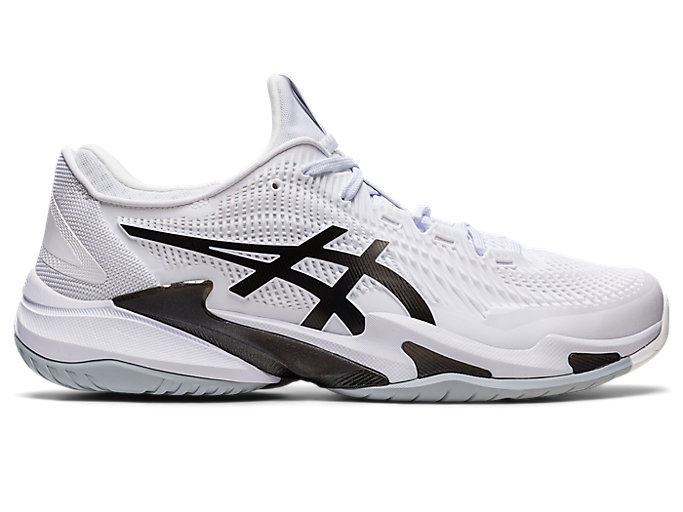
Tennis shoes are purpose-built for specific surfaces in a way that most players don't fully appreciate. Wearing a hard court shoe on clay will leave you sliding at the wrong moments. Wearing a clay court shoe on hard courts will destroy the outsole in a few sessions. Getting this right matters both for your game and your shoes' longevity.
Hard court shoes
Hard courts are the most abrasive surface in tennis. The primary requirement for a hard court shoe is durability — specifically, an outsole that can resist the constant grinding against concrete or asphalt.
Look for a herringbone or modified herringbone tread pattern, which provides grip in all directions without sacrificing too much slide. Sole thickness matters: thicker soles last longer but add weight. The best hard court shoes balance durability with enough cushioning to absorb the shock of a hard surface over several hours of play.
ASICS is the benchmark brand here. The Gel-Resolution line has been used by more ATP players on hard courts than almost any other shoe, and for good reason — the Trusstic reinforcement and gel cushioning hold up over hundreds of hours of hard court play.
Clay court shoes
Clay court shoes have a distinctly different outsole: a full herringbone pattern that runs edge to edge. This allows the shoe to pick up and release clay as you slide, which is the correct movement on this surface. The grooves fill briefly with clay, providing grip, then release as you push off.
Sliding on clay is not just acceptable — it's the correct technique. A hard court shoe on clay will either grip too much (increasing injury risk as your foot stops while your body doesn't) or wear out rapidly as the abrasive clay destroys a non-clay outsole.
Grass court shoes
Grass is the most specialized surface, and most recreational players will never need a dedicated grass shoe. But if you play on grass regularly, the key feature is small, closely-spaced rubber pips or nubs on the outsole. These bite into the turf without tearing it, providing grip on a slippery surface.
Grass shoes have very little lateral support because the surface itself doesn't require the aggressive directional changes that hard and clay courts demand.
All-court shoes
If you play on multiple surfaces or don't play often enough to justify multiple pairs, an all-court shoe is the practical choice. These use a modified herringbone that works reasonably well on hard and clay courts, though not as well as a dedicated shoe on either.
For most recreational players who play twice a week or less, an all-court shoe is the right call.
Baseline Lab Newsletter
Gear reviews. Pro setups. No fluff.
Join players getting the latest string tension guides, racket breakdowns, and shoe reviews — straight to their inbox.